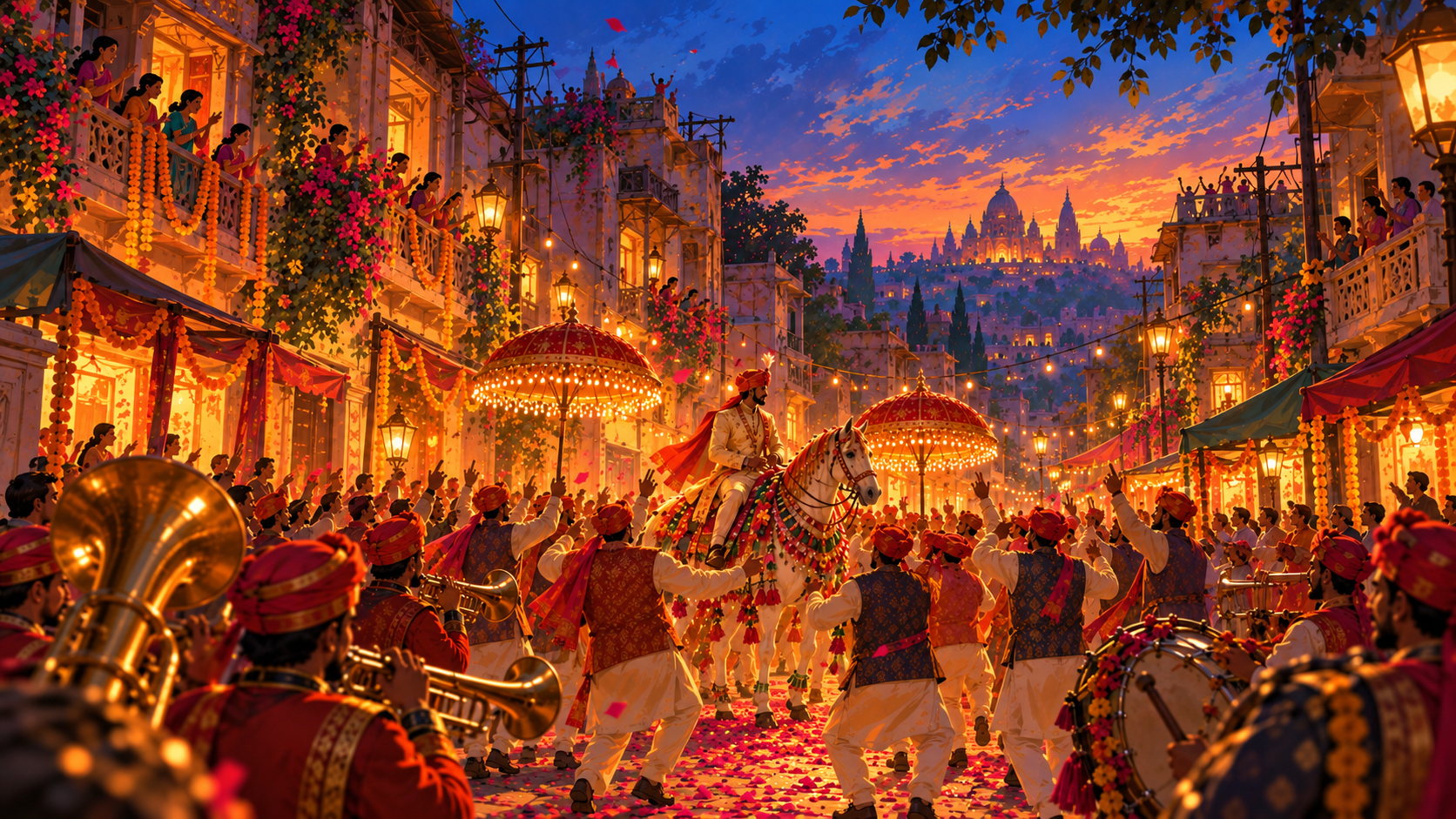
1. The Cultural Meaning and Origin
The word Baraat (Hindi: बारात, Punjabi: ਬਰਾਤ) traces its roots to the Sanskrit term Vara Yatra (वरयात्रा), which translates to the “journey of the groom” or the “suitor's procession.” Historically, when weddings took place across distant villages, the groom, accompanied by his male relatives, village elders, and musicians, would journey over days to reach the bride's village.
The procession symbolized safety, community pride, and a formal demonstration of honor. While modern weddings no longer require cross-country marches, the symbolic travel remains preserved: even if the groom only travels 300 meters down a hotel driveway, the entire community gathers to dance every single step of the way.
No baraat exists without acoustic percussion. Traditional brass bands (often equipped with trumpets, clarinets, trombones, and bass drums) perform Bollywood golden hits, while live dholis (dhol players) provide the relentless, rhythmic heartbeat that commands guests into the dance circle.
2. The Seven Phases of the Baraat
While every family brings regional flair, an authentic North Indian baraat organically follows seven distinct chapters:
Sehra Bandi
The groom's sisters and bhabhis tie the traditional floral or beaded veil (sehra) over his turban to ward off the evil eye before departure. Check our curated groom entry songs for this ceremony.
Baraat Nikli
The procession officially starts. The groom mounts the mare (ghodi) or steps into the vintage convertible, the brass band strikes up the first anthem, and the street becomes an open celebration.
Pehli Gali (Street Dancing)
The procession reaches narrow neighborhood lanes. Friends, cousins, and passing neighbors join the circle as live dhol beats echo off building balconies.
Uncle Era
The prime-time turning point. Senior uncles take off their jackets, loosen their collars, and take over the dance floor to nostalgic 90s Bollywood wedding classics.
DJ Ka Pralay
The mobile DJ sound truck unleashes maximum bass. Pyrotechnics, CO2 jets, and high-voltage Punjabi dance-offs push the energy to its fever pitch.
Dulhe Ki Entry & Milni
The procession halts at the venue gates. The bride's family welcomes the baraatis with garlands, aarti, and the formal introduction of corresponding elders (Milni).
Bas Ek Gaana Aur
The dhol rests, hot kulhad chai is poured, and a tight-knit crew refuses to leave the dance floor until the DJ plays one final acoustic track.
3. Guest Etiquette: What You Need to Know
- Can anyone dance in the baraat? Yes! Unlike formal Western wedding processionals, participation is encouraged for everyone. You do not need formal choreography—just match the energy of the crowd.
- What should guests wear? Wear festive Indian attire (Sherwanis or Kurta sets for men; Lehengas, Sarees, or Anarkalis for women). Most importantly, wear comfortable footwear, as you will be standing and dancing on asphalt.
- Is there food during the baraat? Appetizers and cold drinks are often served from small roving carts alongside the procession, but the main banquet dinner begins after the formal Milni and entrance into the venue.